Fast Cash Loans
KM
Katy McWhirter
Finance & Loans Editor · Updated September 2026

Katy McWhirter
Finance & Loans Editor · Updated September 2026
Imagine it is a Tuesday morning in 2026, and you receive an unexpected $1,200 invoice for emergency car repairs that must be paid before your commute can resume on Wednesday. For many borrowers facing such sudden liquidity gaps, the concept of fast cash loans becomes an immediate priority. The primary goal is speed, but the secondary concern is often the cost of that urgency. In the current financial landscape, a borrower might see options ranging from small-dollar, high-interest products to larger personal loans with more traditional terms.
In 2026, the market for rapid funding has become increasingly segmented. You may encounter lenders who can provide funds within the same business day, while others require a 48-hour window to complete verification processes. Typical loan amounts often fall between $500 and $5,000 for short-term needs, though some specialized products allow for larger sums if credit profiles are robust. It is crucial to recognize that the speed of disbursement does not always correlate with the cost of capital; in fact, the faster you need the money, the higher the potential APR (Annual Percentage Rate) might be.
This article is designed to help you navigate these high-pressure decisions by providing a framework for evaluating different funding sources. We will examine how interest rates interact with repayment terms, identify the mathematical realities of borrowing under pressure, and highlight the critical pitfalls that can lead to long-term debt cycles. By the end of this guide, you should feel equipped to decide whether a fast cash loan is a viable tool for your specific situation or if alternative strategies might better serve your financial health.
When speed is the primary driver, it is easy to overlook how much you are actually paying for that convenience. In 2026, many consumers find themselves choosing between a traditional bank loan and a rapid-disbursement digital product. While a bank might offer an APR as low as 7% or 8%, the approval process can take several days. Conversely, a fast cash product might approve you in minutes but carry an APR that exceeds 30%.
Understanding this trade-off is vital for maintaining long-term stability. If you are borrowing $2,000 to cover a one-time emergency, the difference between a low-interest loan and a high-interest quick cash product could represent hundreds of dollars in interest over just a few months.
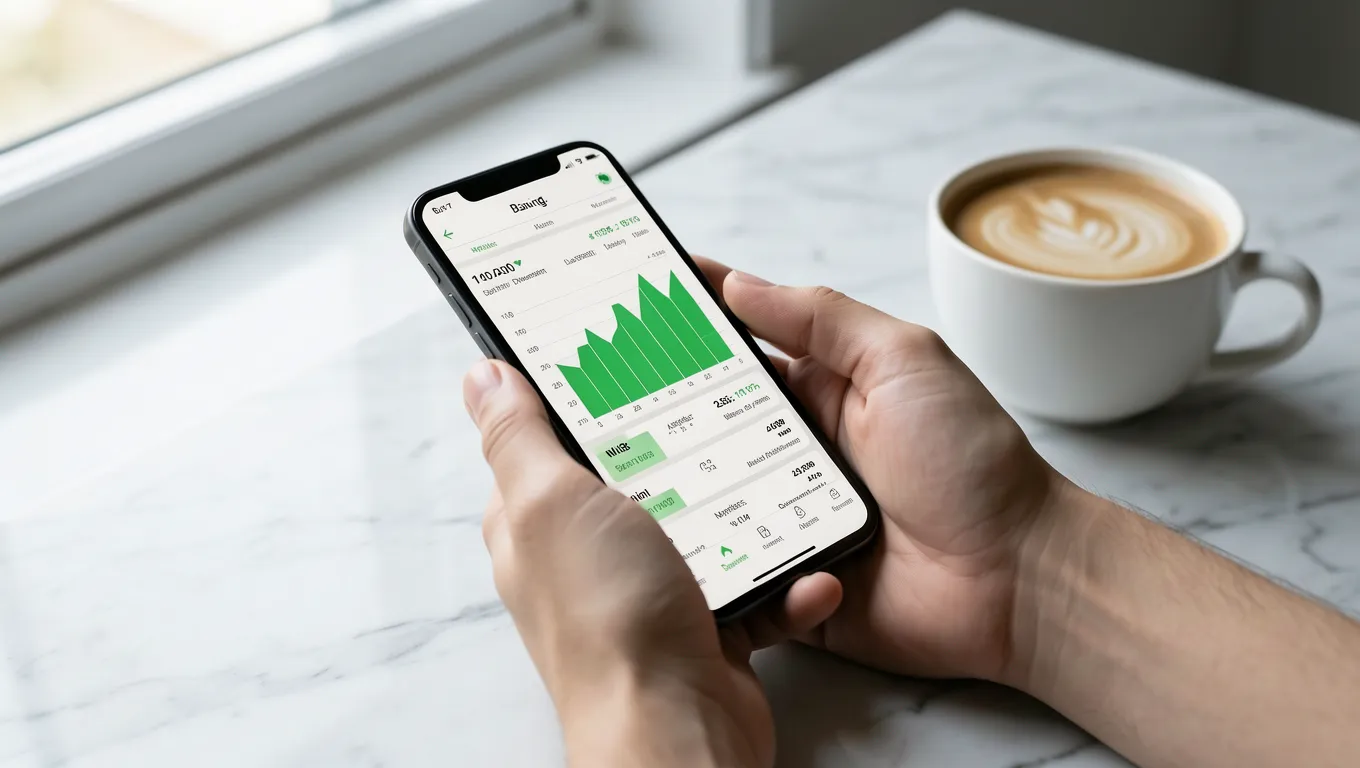
When deciding how to secure funds in 2026, borrowers generally choose between two distinct paths: traditional banking institutions and modern digital lenders. Each path has specific trade-offs that impact both your immediate liquidity and your long-term credit health.
Traditional banks are often the most cost-effective option if you have an established relationship with them and a solid credit score. They tend to offer lower interest rates and more flexible repayment schedules. However, their 'slow' nature is a significant hurdle when you need cash by tomorrow morning. On the other hand, digital lenders specialize in rapid deployment of capital. These platforms use automated underwriting to provide near-instant decisions, which is ideal for emergencies but often comes with higher costs.
Strategy Comparison:
To avoid being blindsided by monthly obligations, it is helpful to run a few quick calculations before committing to a loan. Many borrowers focus on the total amount they receive rather than the total amount they will eventually pay back. Let us look at three specific scenarios for a $3,000 emergency loan in 2026.
In Scenario One, imagine you secure a personal loan with an APR of 12% over a 24-month term. Your monthly payment would be approximately $141.70, and your total repayment amount would be roughly $3,400.80. In Scenario Two, suppose the interest rate is higher at 25% due to a shorter approval window or different credit terms. For that same $3,000 over 24 months, your monthly payment jumps to $163.33, and your total cost reaches approximately $3,919.92.
The gap between these two scenarios is nearly $520 for a relatively small difference in interest rate. When you are in the heat of an emergency, it can be difficult to perform this mental math, which is why we recommend using a simple online calculator or even a basic spreadsheet before hitting 'accept' on a digital offer. Always ask: 'What is my total cost of credit?' rather than just 'How much is my monthly payment?'
The term 'fast cash loans' is often used as an umbrella for several different financial products. In 2026, it is vital to distinguish between a personal installment loan and more predatory options like payday loans or title loans.
A personal installment loan provides a lump sum that you repay in fixed monthly increments. This is generally considered the most stable form of fast cash because the terms are predictable. A payday loan, however, is fundamentally different; it is a very short-term debt meant to be repaid on your next paycheck, often with astronomical interest rates that can lead to a cycle of rolling over the debt.
To navigate this landscape effectively, follow this decision framework:
When facing a financial crisis, the psychological pressure can lead to impulsive decisions. This is when many borrowers fall into what experts call 'the debt spiral.' This occurs when a borrower takes out one high-interest loan to pay off another, or uses a fast cash loan to cover a recurring monthly expense rather than a one-time emergency.
Warning: Never use high-interest short-term loans to fund lifestyle expenses or non-essential purchases. Using these tools for anything other than true emergencies significantly increases your risk of default. If you find yourself needing to borrow money just to cover basic utilities every month, a fast cash loan is not the solution; it is likely a symptom of a deeper budgeting issue that requires a different approach.
One way to avoid this pitfall is to implement a 'cooling-off' period. Even in an emergency, if you can spare 30 minutes to review your monthly budget and ensure you can handle the new monthly payment, you will be much safer. If the math does not work when looking at your next three months of income, do not take the loan.
A common misconception in 2026 is that applying for a fast cash loan will immediately ruin your credit score. The reality is more nuanced and depends entirely on the type of inquiry made by the lender. Most reputable digital lenders will start with a 'soft pull' to provide you with a pre-qualified offer. A soft pull does not affect your FICO or Experian scores.
However, once you decide to move forward with an application, the lender will perform a 'hard pull' to finalize the underwriting. This hard inquiry can cause a temporary dip in your credit score, typically between 5 and 10 points. While this is normal, it is something to be aware of if you plan on applying for a mortgage or an auto loan in the very near future.
Furthermore, how you manage the loan after receiving the funds is what truly impacts your long-term profile. Consistent, on-time payments are beneficial for building credit history, whereas a single late payment can have a much more lasting negative impact than the initial application inquiry. In 2026, as credit reporting becomes even more instantaneous, the importance of timely repayment cannot be overstated.